

Responsible Production. Documented at Every Stage.
GMP-certified manufacturing and operational efficiency are not separate commitments — at IGN, they are the same discipline.
IGN's primary manufacturing facility holds GMP certification awarded by the Republic of Türkiye Ministry of Health — one of the most rigorous cosmetic manufacturing accreditations available, assessed and enforced by a national regulatory authority rather than a third-party auditor. Ministry of Health GMP certification requires full facility inspection, documented quality management systems, batch traceability across the entire production chain, and ongoing compliance with national and international manufacturing standards. It is the standard that separates facilities trusted by multinational corporate clients and international retail programmes from those operating under self-declared or lighter-touch certification frameworks. For brand owners conducting supplier due diligence, it is the single most credible manufacturing credential IGN can present — and it is why IGN is consistently selected by corporate cosmetic houses, pharmacy chains, and international distributors as their preferred manufacturing partner in the region.
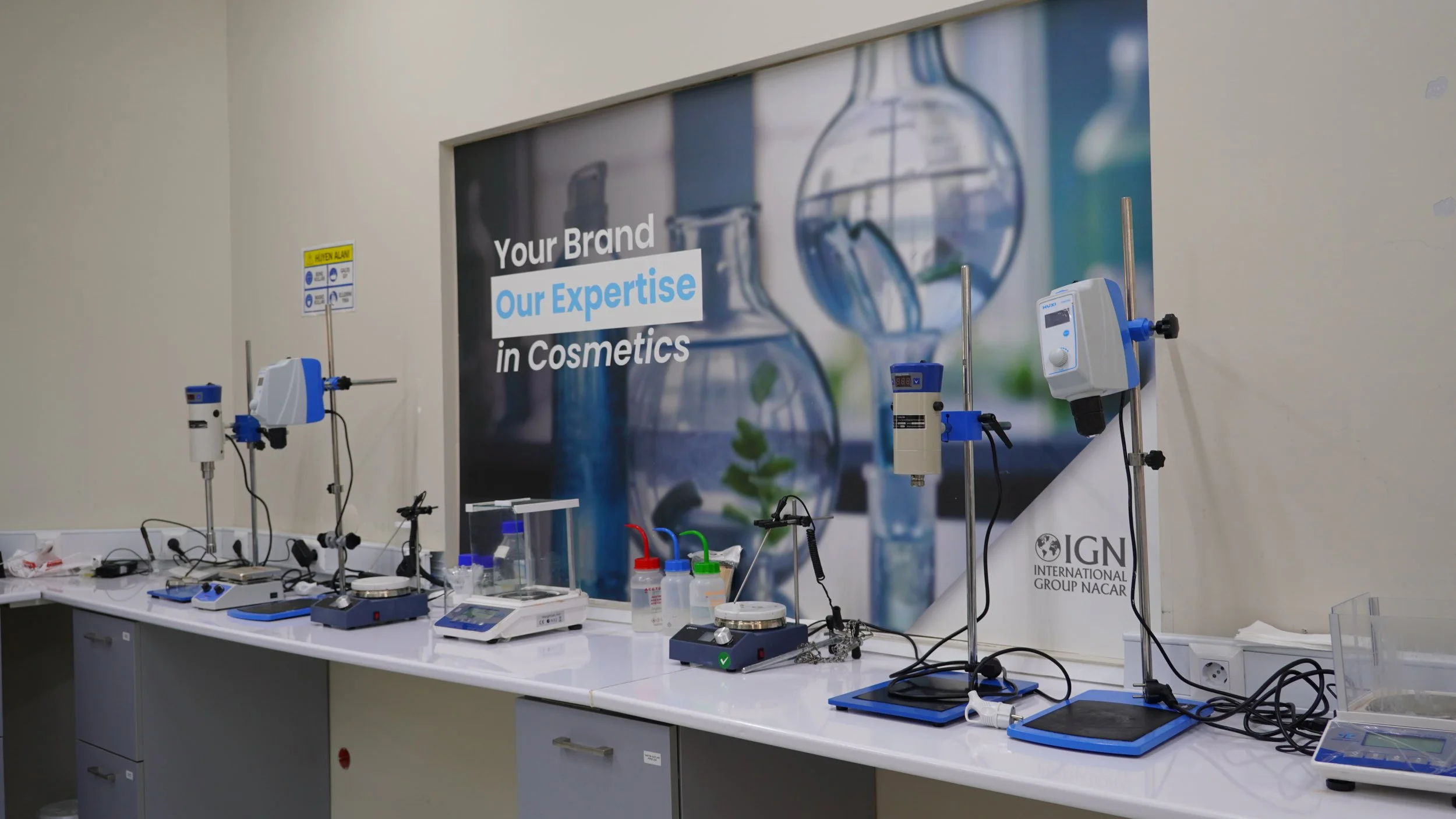
GMP is not only a quality standard — it is a sustainability enabler.
Structured documentation and process control allow:
Reduced batch rejection
Minimized material waste
Controlled raw material inventory
Efficient cleaning validation procedures
Continuous monitoring of production parameters ensures fewer deviations, which translates into lower environmental impact. Efficiency is sustainability in manufacturing.

Our Approach
Manufacturing efficiency at IGN is both an environmental and a quality commitment. Production planning is structured to minimise overproduction — particularly important for low-MOQ clients where batch size discipline directly reduces raw material waste, energy consumption, and packaging surplus.